The Library
A growing collection of lessons in computational art. Each lesson stands on its own, so you can start with any of them.
Lessons
16 lessons shown
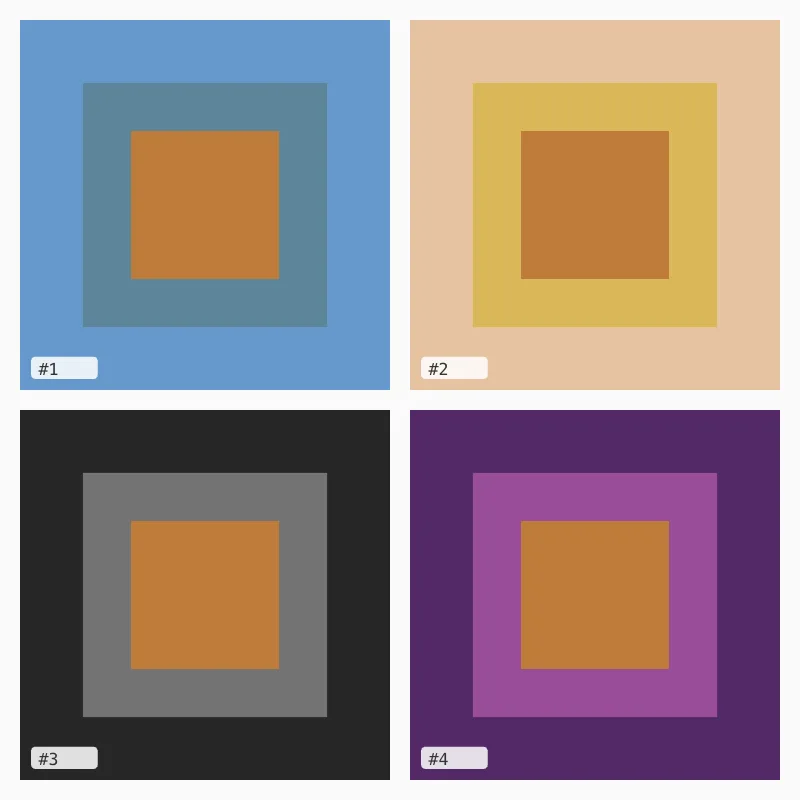
Color as System
Josef Albers (1888-1976)
A color's appearance depends on the colors around it.
Pattern as Code
Anni Albers (1899-1994)
At every crossing in a weave, warp or weft is on top, so cloth can be read as ones and zeros.
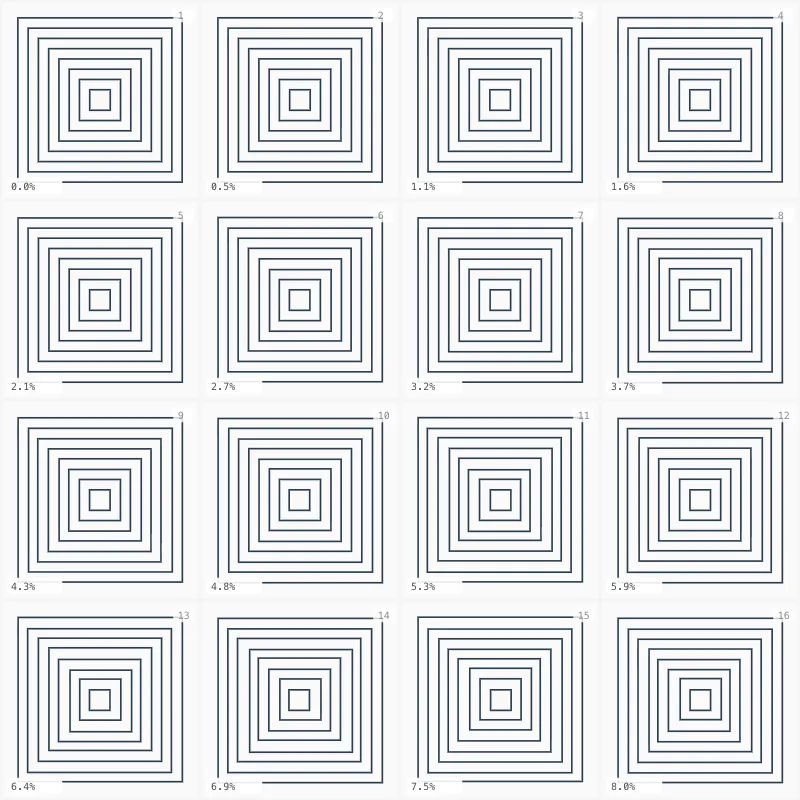
Order and Disorder
Vera Molnár (1924-2023)
She added a small, controlled amount of randomness, her 1% disorder, to strict geometric order.
Instructions as Art
Sol LeWitt (1928-2007)
LeWitt's wall drawings are written instructions, drawn by other hands and redrawn wherever they are shown.
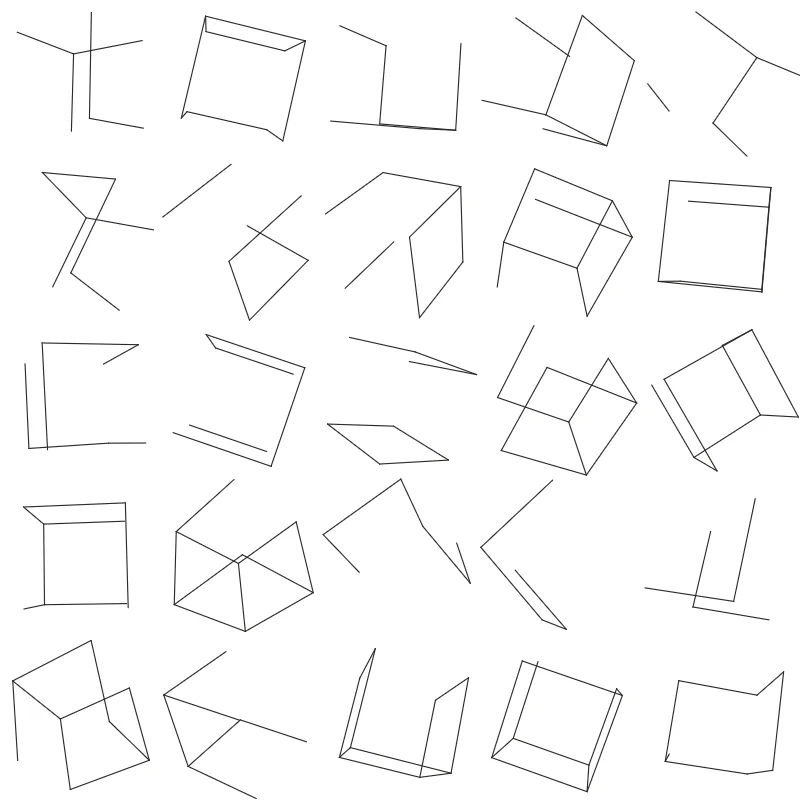
Exhaustive Variation
Manfred Mohr (b. 1938)
From 1973 Mohr built his work on the cube's twelve edges, and later on higher-dimensional hypercubes.
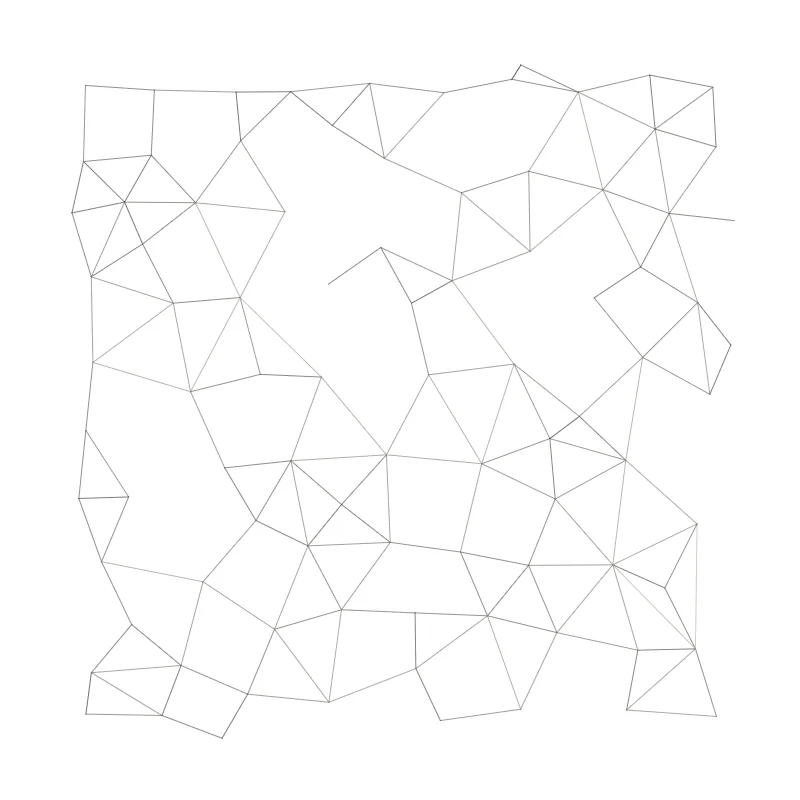
Software as Medium
Casey Reas (b. 1972)
The co-creator of Processing argued that software itself is an artistic medium worth taking seriously.
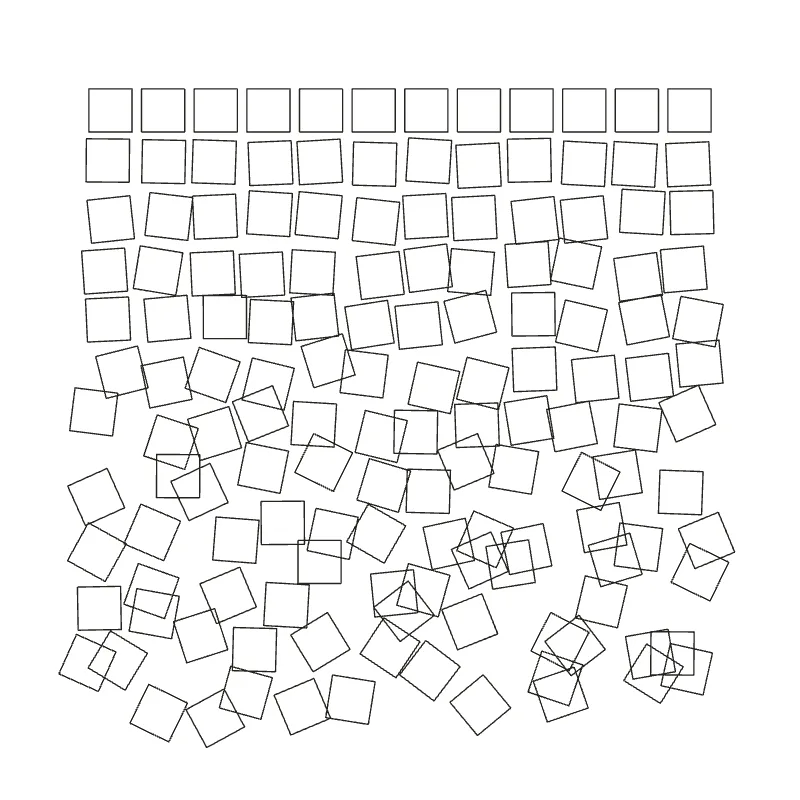
The First Computer Artists
Georg Nees & Frieder Nake
Two mathematicians who hung plotter drawings in Stuttgart galleries in 1965 and called them art.
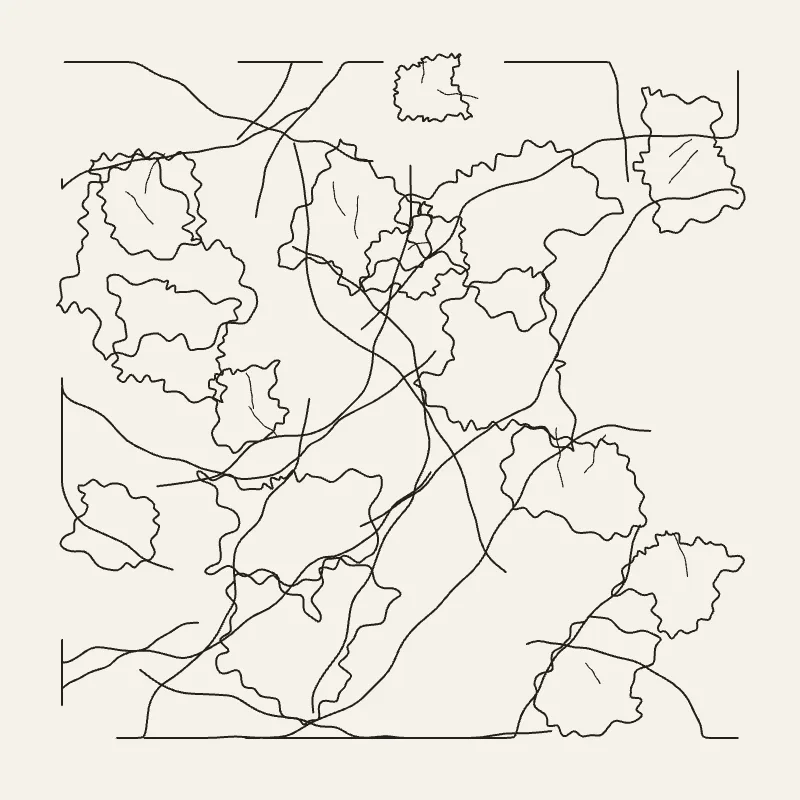
The Autonomous Machine
Harold Cohen & AARON
From the early 1970s, Harold Cohen's program AARON made its own compositional choices inside rules he wrote.
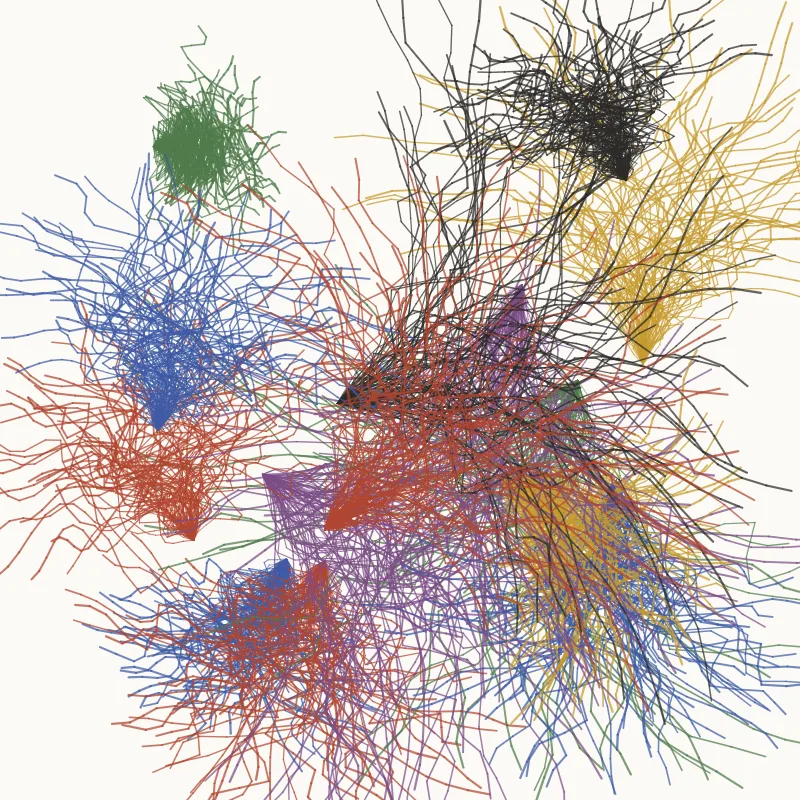
Plotter Pioneers
Roman Verostko & the Algorists
Roman Verostko fitted brushes to a pen plotter in 1987 and co-founded the Algorists in 1995.
Flow Fields and Perlin Noise
Technique-driven
A grid of angles set by Perlin noise steers lines into smooth, flowing curves.
Long-Form Generative
Tyler Hobbs (b. 1987)
One algorithm generates a thousand distinct outputs, and all of them are final.
L-Systems and Fractals
Technique-driven
Short rewriting rules, applied again and again, build fractal forms of any depth.
Algorithmic Color
Technique-driven
Choose hues in golden-ratio steps and build palettes by probability in a perceptual color space.
Human-Machine Collaboration
Technique-driven
Artist and collector explore a parameter space together, and the collector's choices shape the work.
The Physical Output
Technique-driven
Turn generative output into clean, efficient vector paths that a pen plotter can draw.
Developing Your Own System
Your own grammar
Map a non-art source (music, growth, data) into a personal visual system.